Showing posts with label ancient history. Show all posts

Thursday, July 19, 2012

This Day in History July 19, 1799

I am sure that when the term Rosetta Stone is used, you probably think, like I do, of the computer program for learning languages.  But that is not what the original Rosetta Stone is about.  It was on this date in 1799 that the Rosetta Stone was discovered.  It was discovered by one of Napoleon's soldiers during his Egyptian campaign.  When the British defeated the French in 1801, the British took it from the French.

This stone dates back to 196 B.C., and it was found near the city of Rosetta (Rashid).  It is special because it has writing in two different languages (Egyptian and Greek) and three different scripts (hieroglyphic, demotic, and Greek).  It is now housed in the British museum where it has been since 1802.

In 1822, Jean-Francios Champollion deciphered the meaning of the writing on the stone due to his language skills in Greek and Coptic.  The meaning of the writing was a listing of all the good things the Pharaoh had done for his priests and people.

There is a lot more information at these various sites:
http://en.wikipedia.org/wiki/Rosetta_Stone
http://www.history.com/this-day-in-history/rosetta-stone-found
http://www.ancientegypt.co.uk/writing/rosetta.html
http://famousdaily.com/history/rosetta-stone-found.html

Thursday, June 14, 2012

This Day in History June 15, 763 B.C.

I love it when things said in the Bible can be verified, and today happens to be one of those days.  In Amos 8:9, it says: "`And on that day,' says the Lord God, `I will make the Sun go down at noon, and darken the Earth in broad daylight'."  And on this date in 763 B.C., this is exactly what happened.  The Assyrians confirmed it, and this is earliest recorded solar eclipse. 


Whenever I think of ancient solar eclipses, I think of the Bing Crosby film A Connecticut Yankee in King Arthur's Court (based on the Mark Twain book of the same title).  There is a solar eclipse that rescues his character, and the people begin to panic.  The sun goes dark, and people believe that it is some black magic afoot.  I am sure that when this happened, it had to be a frightening time.  And if they connected it with the prophet's message, they may have even been more scared.  I would love to see a solar eclipse one of these days, but oh well, it's not a big deal.


For more information, please check:
http://english.ohmynews.com/ArticleView/article_view.asp?menu=A11100&no=282481&rel_no=1&back_url=
http://www.tourochina.com/newsarea/1232/Historical-eclipses
http://skepticism.org/timeline/june-history/6267-solar-eclipse-observed-recorded-assyria.html
http://www.earthview.com/ages/history.htm

Saturday, June 9, 2012

This Day in History June 9, 68 A.D.

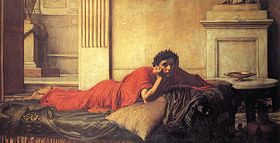
I am familiar with the person who is featured today.  The crazy emperor of Rome, Nero, committed suicide on this date in 68 A.D.  While not everything is known about what actually happened, it seems as though he was going to be executed as a public enemy.  He hid, and he knew he had to take his life to avoid a painful execution.  But it seems that he actually did not perform the act--he couldn't do it.  He had his private secretary do it.  Sounds like something Nero would do.

Nero is infamous for several reasons.  He was crazy, artistic, sadistic, and full of himself.  Popular legend says he played the fiddle while Rome burned (just a rumor, it would appear).  No one knows for sure if he burned Rome, but he did blame the burning on the Christians.  He then inflicted horrible torture on those of the Christian faith.  He put them in animal skins and had them torn apart by wild animals.  He nailed them on crosses.  He even set them on fire to serve as illumination in his garden at night.


Whenever I think of Nero (and the majority of Roman emperors), I never have a high opinion of them.  Rome was a troubled empire in spite of everything it achieved.  And Nero was one of the worst (although it would seem that Domitian was worse, if I remember my history correctly).  I am always reminded of horrific deaths that Christian martyrs were forced to undergo during his reign.  I am humbled and horrified.  I can only hope that if placed in a situation like that, God would give me the grace to endure.

For more information, please check out:
http://ancienthistory.about.com/od/romeancientrome/ig/Ancient-Rome/Nero.-3xd.htm
http://en.wikipedia.org/wiki/Nero
http://www.christianitytoday.com/ch/thisweekinchristianhistory/june9.html

Saturday, April 21, 2012

This Day in History April 21, 753 B.C.

I was up at the crack of dawn, so forgive the brevity of today's feature. Yes, it was on this date in 753 B.C. that Rome was founded. Or says tradition states, Romulus and his twin brother Remus founded Rome on the spot where a she-wolf suckled them since they were orphans. Actually, it was Roman scholar Marcus Terentius Varro established Roman's founding date.

I will not go into everything here, but if you would lime to read about the myth, check out this site:


http://www.history.com/this-day-in-history

Tuesday, November 15, 2011

This Day in History November 16, 42 B.C.

Time to go way back to ancient history.  Haven't been there in a while.  And it just so happens that on this date in 42 B.C.  It just so happens that he was the second emperor of Rome.  I got really confused as I tried to understand his parentage.  So I'll skip that for now.

Tiberius was the not the first choice to succeed Augustus as Ceasar.  He was actually fourth, and he only became emperor due to the others' death.  He was generally a healthy person with occasional skin rashes (?) and a great fear of thunder.  He did not like gladiatorial games, and he did not even pretend to like them to gain popularity with the common Romans.

Augustus actually adopted Tiberius, and in Augustus's last year of life, Tiberius shared the rule with him.  Following the death of Augustus in 14 A.D., Tiberius was voted emperor by the senate.  I discovered he was not the usual Roman emperor--he seemed rather reluctant to fully embrace his role.  He had issues with paranoia and betrayal as well.  And of interest to many of us, Tiberius was emperor when Jesus was crucified.  He reigned 23 years and died at the age of 78 on March 16, 37 A.D.  I do find it interesting that he was so unpopular that he never received divine honors from the senate.

There is a lot of information in these links, so investigate!
http://www.roman-empire.net/emperors/tiberius.html
http://ancienthistory.about.com/od/emperors/ig/12-Caesars/Tiberius-.htm
http://www.crystalinks.com/tiberius.html

Thursday, September 15, 2011

This Day in History September 16, 16 A.D.


Back to ancient history yet again.  Today in 16 A.D., Julia Drusilla was born.  She was the daughter of Germanicus and Agrippina the Elder.  She had two sisters:  Julia Livilla and Agrippina the younger.  She had five brothers:  Nero Caesar, Drusus Caesar, Tiberius Caesar, Gaius Caesar, and Gaius Caesar Germanicus (nicknamed Caligula and became third emperor of Rome from March 28, 37-January 24, 41).  She was born in Ambitarvium, north of the later city of Koblenz, Germany.

Drusilla married Lucius Cassius Longinus om 33. but they divorced in 37.  By the time, the rumor was that Caligula had become a lover to all three sisters.  He may have even told the couple to divorce.  Drusilla was reportedly Caligula's favorite.  Due to the relationship between the two (although we do not honestly know how far it went), she was gained a bad reputation and was even called a prostitute by later scholars.  Just how much was true is unknown.  What is known is that she occupied the place of honor during her brother's dinner parties, as if she were the female head of the household, i.e., his wife.

She did marry again--Marcus Aemillius Lepidus.  What he reportedly was to Caligula I will not say here.  It is confusing and not nice to talk about.  If you are interested, you can check out the sites at the end.  

Drusilla died June 10, 38.  There is a rumor that she was pregnant with Caligula's child, and he felt threatened by this supposed divine child.  Some say he essentially killed her for this reason, but others say it was a fever.  (Don't you just love ancient history? And you thought your family was weird!)  It is said that Caligula never got over her death.  He buried her with honors, and he acted as a grieving widower.  He did have the Roman Senate declare her a goddess--Diva Drusilla.  She was the first woman in Roman history to have this honor. 

Following her death, Marcus (her truly widowed husband) began going after Caligula's other two sisters.  It was discovered that his reasoning was to hopefully overthrow Caligula.  Of course Marcus was swiftly executed.  Caligula did name his only daughter after her--Julia Drusilla. 

Although we cannot even begin to imagine this strange tale, it has been suggested that Caligula was merely doing what the Hellenistic Monarchs of the Ptolemaic dynasty where marriages between brothers and sisters were normal, not scandalous.  Remember Cleopatra?  

For more information, check out these links:


Monday, August 29, 2011

This Day in History August 30, 30 B.C.

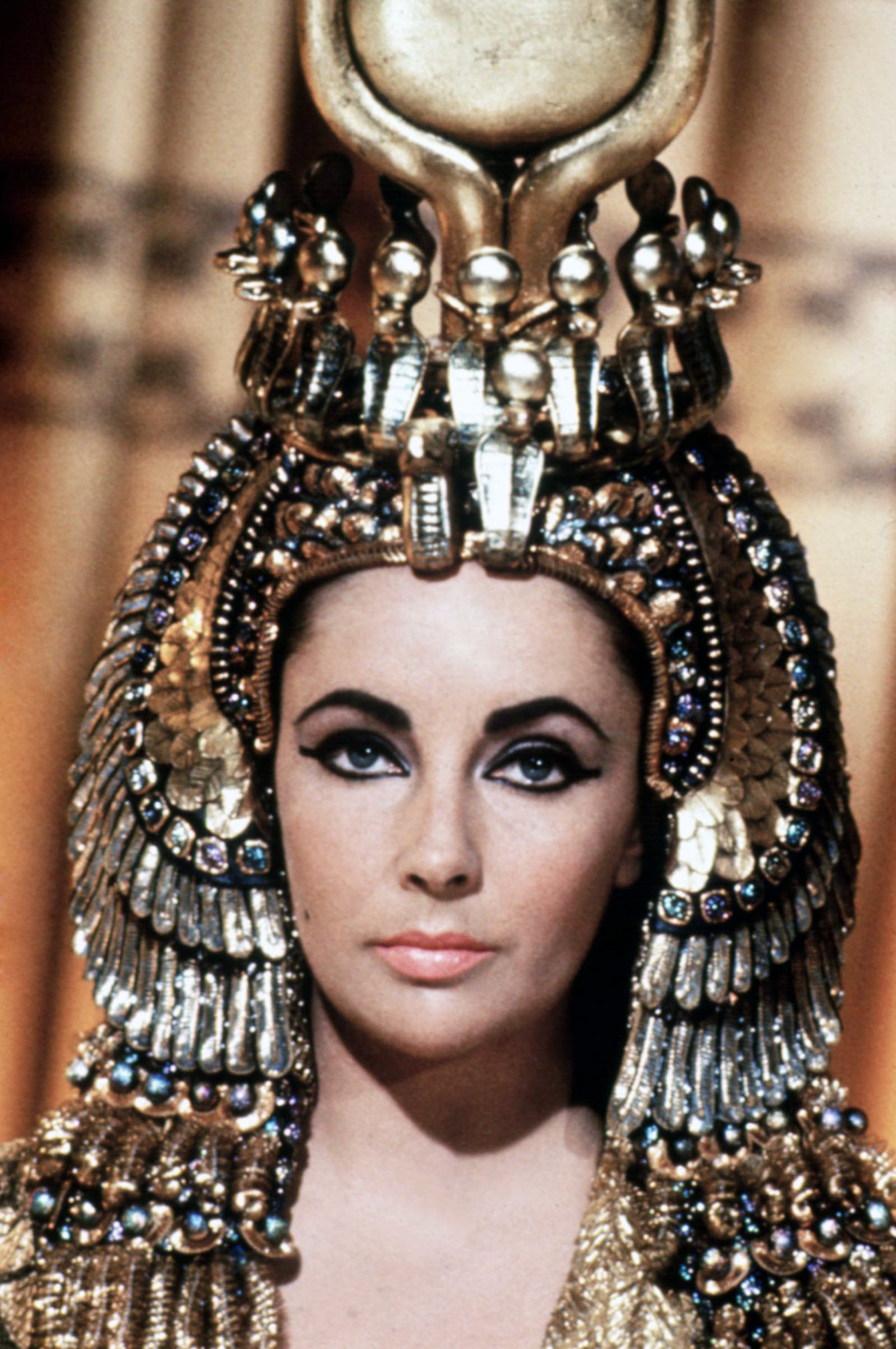
Beautiful, isn't she?  Well, it's kind of hard to tell.  But history says she was.  And at least Julius Caesar thought so.  As did Mark Antony.  On this day in history back in 30 B.C., Cleopatra VII, Queen of Egypt, committed suicide.

The name Cleopatra was a common name in the Ptolemaic family, and at the age of 17, she married her younger brother (eww!!) Ptolemy XII.  Julius Caesar helped her lead a revolt against her brother, and Caesar helped her regain the Egyptian throne.  Her "husband" accidentally drowned in the Nile, and she married her still younger brother Ptolemy XIII (this is really a messed up family!).  She became Caesar's mistress, followed him to Rome, bore him a son (which he did not formally claim).

Following Caesar's murder, Marc Antony fell in love with her.  They married in 36 B.C. (are you following this?) , and she was seen as a threat to Rome.  Octavian and Augustus tried to destroy them.  They were defeated in 31 B.C., and Marc Antony fell on his own sword.  Then she killed herself as well--via a poisonous snake according to legend.

There is so much legend about her, and much of what we know about her was written after her death.  So all we do know is that this was the date of her death, and it would seem appropriate (in light of the craziness of the family, Rome, and Egypt) that she did in fact kill herself.

If you would like more information, check out these sites:
http://www.infoplease.com/ce6/people/A0812535.html
http://womenshistory.about.com/od/cleopatra/a/cleopatra.htm
http://ancienthistory.about.com/cs/people/p/Cleopatra.htm

My favorite Cleopatra--Elizabeth Taylor


Related Posts Plugin for WordPress, Blogger...
Your Ad Here