Showing posts with label president. Show all posts

Friday, March 15, 2013

This Day in History March 15, 1941

FDR in 1933

I found this quote especially interesting in light of current events.  It was on this date in 1941, that President Franklin Delano Roosevelt gave a speech at the White House Correspondents' Association.  This was the beginning of his third term, and the threat of WWII was looming in Europe.  Nazism was rampant in Germany and elsewhere.  We had not officially entered the War in the U.S.  Here is the famous statement he made:
"They (who) seek to establish systems of government based on the regimentation of all human beings by a handful of individual rulers... call this a new order. It is not new and it is not order. "

Although it is true that Nazism is basically a thing of the past (though truly not completely), their ideals still exist all over the world.  We see prejudices, senseless killing, and totalitarian governments where people's freedoms are impinged upon.  Let us hope and pray that this horrid part of the human experience can be eradicated.  I believe one day it will be gone, but I just wish the time were sooner rather than later.

For more information:
http://famousdaily.com/march15.html
https://www.mtholyoke.edu/acad/intrel/WorldWar2/fdr24.htm

Sunday, February 17, 2013

This Day in History February 17, 1801

I thought this would be a rather timely feature since President's Day is tomorrow.  Th election of 1800 featured Thomas Jefferson and Aaron Burr.  There was no majority winner between the two.  Therefore it was up to the House of Representatives to pick a winner.  The House was dominated by the Federalists, and  they didn't like either candidate.  There was some heated debate for about a week, and scandal was possible if a president was not chosen soon.  After all, the electoral process was still in its infancy (as was our country).  It was finally determined that Jefferson was the lesser of two evils, and so on this date in 1801, Thomas Jefferson was chosen as our third president.  Aaron Burr became his vice-president (that was how things were decided back then--most votes=president; runner-up=vice-president).

For more information:
http://americanhistory.about.com/od/thomasjefferson/a/ff_t_jefferson.htm
http://en.wikipedia.org/wiki/Thomas_Jefferson
http://famousdaily.com/history/thomas-jefferson-became-the-3rd.html

Tuesday, February 12, 2013

This Day in History February 12, 1809

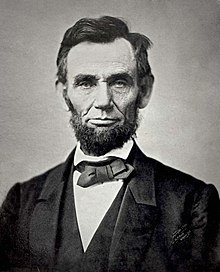
I had no idea about today!  On this date in 1809, our sixteenth president, Abraham Lincoln, was born.  I will tell you right now that he is my favorite president.  I am not naive enough to think that he was perfect, but I greatly respect him.  I am looking forward to seeing O'Reilly's Killin g Lincoln this Sunday on the National Geographic channel.  My mom read the book--I haven't had a chance yet.  And I didn't get to see the film  when it was in theaters, but I plan to see it when it comes out on DVD.

For more information on this amazing man, please check out:
http://www.biography.com/people/abraham-lincoln-9382540
http://en.wikipedia.org/wiki/Abraham_Lincoln
http://www.famousbirthdays.com/people/abraham-lincoln.html

Wednesday, November 7, 2012

This Day in History November 7, 1841

Thomas Eakins [Public domain], via Wikimedia Commons
"For honest merit to succeed amid the tricks and intrigues which are now so lamentably common, I know is difficult; but the honor of success is increased by the obstacles which are to be surmounted. Let me triumph as a man or not at all."

We can find this quote in the journals of Rutherford B. Hayes on this date in 1841.  This was long before he became president, and I felt his story was exactly what we should hear on this date of a divided country.  He knew what it meant to be president of a divided country.  He was our 19th president (1871-1881).  His election was the most contested president in history. Talk about name-calling--thief, drunken syphilitic.  African Americans were kept from voting in the South, and the most hotly contested states were Florida, Louisiana, and South Carolina.  Republican Hayes did not receive the popular vote, but he still became president.  Maybe there is something to learn here?  And then again, maybe not because it sounds like Hayes was part of the problem rather than the solution.

For more information:
https://en.wikiquote.org/wiki/Rutherford_B._Hayes
http://blogs.smithsonianmag.com/history/2012/09/hayes-vs-tilden-the-ugliest-most-contentious-presidential-election-ever/
http://www.famousbirthdays.com/people/rutherford-b-hayes.html

Saturday, November 3, 2012

This Day in History November 3, 1964


I did not even know about the 23rd amendment, did you?  It just so happens on this date in 1964, residents of Washington D.C. got to vote in the presidential election for the first time!  Washington D.C. is not a state, and it was originally founded in 1791, as federal district housing for the capital.  But the residents were not allowed to vote!  It took this amendment to make this happen.  Residents are still not represented in Congress, and due to the heavy democratic climate of the area, that will probably never happen.  Thus, "taxation without representation" is a popular motto in the area.

For more information:
http://famousdaily.com/history/washington-dc-residents-vote-in-elections.html
http://www.history.com/this-day-in-history/dc-residents-cast-first-presidential-votes
http://en.wikipedia.org/wiki/District_of_Columbia_voting_rights

Wednesday, September 26, 2012

This Day in History September 26, 1960

http://commons.wikimedia.org/wiki/File:Kennedy_Nixon_Debat_(1960).jpg#file

I find this quite appropriate in light of the season in which we find ourselves now.  On this date in 1960, the first televised presidential debate occurred live on television.  Seventy million viewers tuned in to watch Senator John F. Kennedy and Vice-President Nixon "spar" in this all-important debate.  And yes, indeed, it did help decide the debate.  Image was important, and you know who won that hands-down--Kennedy!  Nixon had spent the weeks prior recovering from a knee operation, and he came across as thin, pallid, and wooden.


  Watch More News Videos at ABC
  |
  2012 Presidential Election
  |
  Entertainment & Celebrity News

For more information, please check out:
http://famousdaily.com/history/first-televised-presidential-debate-chicago-nixon-kennedy.html
http://www.museum.tv/eotvsection.php?entrycode=kennedy-nixon

Friday, August 10, 2012

This Day in History August 10, 1874

Recognize this man?  He was the president who was blamed for the Great Depression--Herbert Hoover.  And on this date in 1874, he was born to a Quaker family in West Branch, Iowa.   He was orphaned in 1884, and 1885, he went to live with his uncle in Newberg, Oregon.  He went to Stanford University when it opened in 1891, and he graduated as a mining engineer.

He married his college sweetheart, and together they went off to China.  In 1900, he and his wife were caught up in the Boxer Rebellion.  They eventually were able to leave for London.  He was there when WWI broke out, and he was instrumental in helping stranded tourists get back home.  During the War, he was appointed head of the Food Administration, and he was extremely successful in keeping the Allies fed.

Under Presidents Harding and Coolidge, he served as Secretary of Commerce.  He then became the Republican Presidential nominee in 1928, and he became the 31st President of the United States.  And but ten months later, the Great Depression occurred, and he became the scapegoat.  He truly did try to relieve the economic suffering, but it would appear that he had plenty of opponents in Congress.

I did not realize that he served as a chairman to reorganize the Executive Departments under both President Truman and President Eisenhower.  He continued to work on several writings and papers up until his death on October 20, 1964, at the age of 90.

For more information, please check out:
http://www.whitehouse.gov/about/presidents/herberthoover/
http://www.newworldencyclopedia.org/entry/Herbert_Hoover
http://www.famousbirthdays.com/people/herbert-hoover.html

Saturday, July 14, 2012

This Day in History July 14, 1913

On this date in 1913, the 38th president of the United States was born--Gerald Rudolph "Jerry" Ford, Jr. was born in Omaha, Nebraska.  Originally, his name was Leslie Lynch King, Jr.  He did not formally change his name until 1935.  His mom had divorced and remarried.

Of course, Ford is known as the president who pardoned Nixon in the Watergate scandal--he was President Nixon's Vice-President.  Ford served as president from August 9, 1974 until 1977 when he lost the presidency to Jimmy Carter.  In spite of that, he and Carter were good friends throughout his life.

He died on December 26, 2006 at his home with his family around him.

I am not nor never have been a fan of President Ford, but I have to admit that I don't know everything about him and his presidency.  I was only about two months old when he became president, and I have not studied his presidency in any great detail.  I'll leave that to others--I have to admit I am not incredibly interested.  I was interested to discover that he was born the same year as my mom's dad (who passed away in 1995 from cancer).

For more information, please check out:
http://www.nndb.com/people/400/000022334/
http://www.newworldencyclopedia.org/entry/Gerald_Ford
http://www.whitehouse.gov/about/presidents/geraldford/
http://en.wikipedia.org/wiki/Gerald_Ford
http://www.famousbirthdays.com/people/gerald-r-ford.html

Monday, July 2, 2012

This Day in History July 2, 1881


As the video explains, it was this date in 1881 that President James Garfield was assassinated.  Charles Guiteau suffered from mental illness and began to stalk the president since things were not going as he had planned.  As the president was preparing to leave on summer vacation, Guiteau shot him at point blank range.  Guiteau was immediately apprehended, and the president was carried back to the White House with a bullet still lodged in his body (that the doctors had been unable to find).

President Garfield's condition continued to fluctuate.  Doctors continued to search for the bullet with unwashed hands (they didn't know that germs were an issue).  He suffered through many different kinds of infections.  It was on September 19, 1881, that the president finally succumbed to blood poisoning and pneumonia.  He probably would have survived had the doctors been more knowledgeable, and it is a testament to him that he lived as long as he did.  This is one of the true tragedies of American presidential history.

For more information, please check out:
http://www.historybuff.com/library/refgarfield.html
http://www.cbsnews.com/8301-3445_162-57464503/how-doctors-killed-president-garfield/
http://en.wikipedia.org/wiki/James_A._Garfield_assassination
http://memory.loc.gov/ammem/today/jul02.html

Sunday, April 29, 2012

This Day in History April 30, 1789

I wish this guy were still around.  I definitely think I would vote for him!  On this date in 1789, George Washington was inaugurated as our first president!  He was the only president who was elected unanimously.  That always amazes me.  I didn't realize he was actually inaugurated twice, but this was the first inauguration.

Throughout my historical studies, I am amazed at the wide variety of information out there.  I was taught that Washington was a prideful man, and some will claim that he was not a true follower of God.  They will call him a deist.  I do not know everything about this first president.  Perhaps he had a problem with pride--who doesn't?  I am not here to judge his belief in God.  What I do know is that he was our first president, and he was a fine leader.  We would not be the country we are today had it not been for him.  God put him in place, no matter what you believe.

For more information, check out:
http://hlnfamily.com/blog/?p=469
http://www.pbs.org/newshour/inauguration/lesson_washington.html
http://www.apples4theteacher.com/holidays/presidents-day/george-washington/facts.html
http://ushistorysite.com/george_washington.php

Wednesday, November 30, 2011

This Day in History December 1, 1824


Political PartyPresidential Nom.VP Nom.#%#%
Democratic-RepublicanAndrew Jackson9937.90
Democratic-RepublicanJohn Quincy Adams8432.20
Democratic-RepublicanWilliam H. Crawford4115.70
Democratic-RepublicanHenry Clay3714.20


What I have put above is some very unusual election results from the election of 1824.  As you can see, no one won the majority.  At least as far as percentage goes.  And while it was Jackson and Adams who had the most electoral votes, Crawford and Clay complicated things.  No candidate had the 50% of the electoral votes needed to win.

So on this date in 1824, Congress was called in to decide the election.  This was according to the 12th amendment.  And the decision had to be made between John Quincy Adams and Andrew Jackson--two candidates who were on opposite sides of the poles.

It was Speaker Henry Clay who convinced Congress to go with Adams.  And it should come as no surprise that Adams chose Clay for his Secretary of State.  Jackson became rather irate, and he united the fragmented Democratic party, and in four years, Jackson easily beat Adams.

I have heard before that presidents can be elected without a majority of the vote.  I now see that this did happen.  I probably learned about it in history, but I don't always remember everything.  To be perfectly honest, I am not a fan of Jackson, and Quincy Adams was not really exciting.  But between the two, I am glad that Adams won.  It was Jackson's policies that began to lead to the Civil War.

For more information on this, check out:
http://www.history.com/this-day-in-history/congress-decides-outcome-of-presidential-election
http://www.historycentral.com/elections/1824.html
http://www.presidency.ucsb.edu/showelection.php?year=1824

Sunday, November 27, 2011

This Day in History November 27, 1911

President Taft
Ready for something a little lighter from this day in history?  Read on!

Elizabeth Jaffray
This woman was President Taft's housekeeper, and she evidently kept quite a diary about the happenings in the presidential household.  And it was on this date in 1911 that she wrote about a conversation she had with the president and his wife about the president's "expanding waistline."

President Taft had a serious weight problem and would, by today's standards, been obese.  He was 5'11", and throughout his lifetime he wavered between 270 and 340 pounds.  He realized he had a weight problem, but he did not often do anything about it.  He often ate two oranges, a twelve-ounce beefsteak, several pieces of toast with butter, and a large quantity of coffee with cream and sugar for breakfast alone.  He reportedly had to have a valet tie his shoes and often got stuck in the White House bathtub.  He even split his pants while getting out of a carriage according to the czar of Russia.

I found it interesting to note that even back during these times weight and overeating was an issue.  We sometimes tend to think that people were always much healthier in the "olden days."  I also find it interesting that a housekeeper was not fired for expressing this concern to the president of the United States.  I actually wonder if this happened today, would the housekeeper have lost her job?  We have to be so careful about what is said in this day and age.

Here are some links to more information in case you are interested:
http://www.history.com/this-day-in-history/white-house-housekeeper-frets-over-presidential-waistline
http://www.whitehousehistory.org/whha_exhibits/working_whitehouse/b3_early-20th-century_b.html
http://www.politico.com/news/stories/1107/7043.html

Monday, October 24, 2011

This Day in History October 25, 1764

On this day in 1764, the woman pictured above (Abigail Smith Admas) married the man below (John Adams, our second president). This marriage lasted an amazing 54 years!
When she married John Adams, he was a young lawyer.  Abigail was known for being a great historian of national events in her letters.  She and her husband corresponded quite regularly throughout all the important historical events--Continental Congress, Vice-Presidency, and more.

She was the first Second Lady and the second First Lady (although neither term was used until after her death). Following her husband's presidency, they retired to their family home for the next 17 years.  However, she was the mother of John Quincy Adams--our sixth president.

I think the thing that draws me to this story is that if you read between the lines, John and Abigail Adams had a loving relationship.  It seems that he was not a domineering husband (as so many were back then).  And she definitely loved and supported her husband.  When we say they were married 54 years, I think we could easily say that it was not a marriage of convenience but it was a marriage based on friendship and love.  They had the secret.  Too bad that most people don't have that kind of success.

For more information, check out:
http://timelines.com/1764/10/25/abigail-smith-married-john-adams
http://www.americaslibrary.gov/jb/revolut/jb_revolut_adams_1.html

Friday, October 14, 2011

This Day in History October 14, 1912

I had never heard this story before, so I found it rather interesting.  Did you know that Theodore Roosevelt was shot?  No, he was not killed, but yes, he was shot.  It was this day in 1912.  Read on.

He was making a campaign speech in Milwaukee, Wisconsin.  He was the presidential candidate for the Progressive Party.  He was shot at close range by  saloonkeeper John Shrank.  Shrank had aimed the pistol at Roosevelt's head, but a bystander deflected his arm as the trigger was pulled.  Roosevelt did not even realize he was shot.  He reached into his pocket to retrieve his 50-page campaign speech (which was folded in half), and he noticed blood on his fingers.  No doubt, that campaign speech slowed down the bullet!  His glasses case was in the same pocket, and it evidently slowed down the bullet, too.  The bullet actually did enter his chest on the right after passing through both items!

Following the bullet wound, Roosevelt went on to deliver his scheduled speech (wow!). His words were: "You see, it takes more than one bullet to kill a Bull Moose."  Unfortunately, the bullet slowed down his campaign.  He did go to the hospital (reluctantly, of course), and after eight days, he was released.  It was just in time for the election--which he lost to Woodrow Wilson. The bullet was never removed, and it caused him no further problems.

What about Shrank, the shooter? They found him insane, and was committed to a mental hospital where he died in 1943.

I really like this story.  Doesn't it sound just like Theodore Roosevelt?  He had already served as president from 1901-1909, and here he was running again.  And a bullet could not even slow him down.  If you want more information, check out these sites:
http://www.history.com/this-day-in-history/theodore-roosevelt-shot-in-milwaukee
http://www.doctorzebra.com/prez/z_x26a_g.htm

Monday, September 5, 2011

This Day in History September 6, 1901

This was a bad day for this man back in 1901.  And our current president thinks he had it bad!  Just read on.

William McKinley was born on January 29, 1843, in Niles, Ohio.  He taught for a short time before going off to fight in the Civil War. Following the war, he practiced law in Canton, Ohio and got married.

At the age of 34, he was elected to Congress and served for 14 years in the House of Representatives.  He was very well liked, and he championed the tariff issue (McKinley tariff of 1890).  He then served as the governor of Ohio for two terms.

McKinley went on to be elected in 1896, thus becoming the 25th president of the United States.  He was president during the Spanish-American War and the annexation of the Philippines, Guam, and Puerto Rico. He also fought hard against trusts and industrial monopolies.  While he had his issues, he defeated Bryan in 1900 and was elected to a second term.

Labor issues are what led to Leon Czolgosz making the decision that government must be dismantled.  It was on this day in 1901 that this young anarchist got his chance to carry out his plans.  President McKinley was standing in a receiving line at the Buffalo Pan-American Exposition, and Czolgosz shot the president twice at point blank range.  The president was mortally wounded, but lived for 8 days.  He finally succumbed to blood poisoning, and he became the third president to be assassinated.  His unapologetic assassin was electrocuted October 29, 1901.

For more information, check out these sites:


Related Posts Plugin for WordPress, Blogger...
Your Ad Here