Showing posts with label weather history. Show all posts

Monday, October 15, 2012

This Day in History October 15, 1987

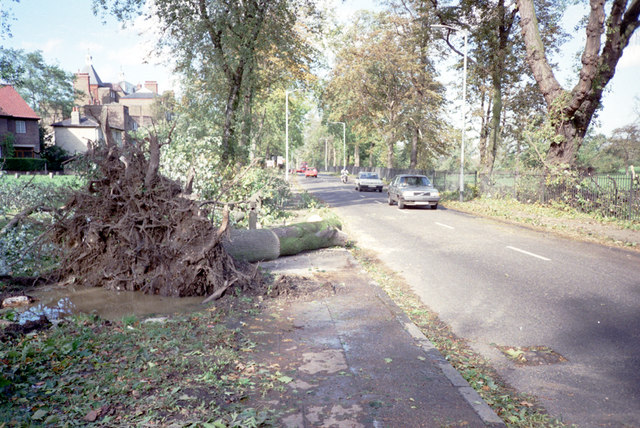
David Wright [CC-BY-SA-2.0 (http://creativecommons.org/licenses/by-sa/2.0)], via Wikimedia Commons
It was on this date in 1987 that a very rare storm occurred called the Great Storm of 1987.  It hit England and France with a vengeance, and no one was really prepared for the 80 mph winds that wreaked havoc on these areas.  It is believed that this is a "once in 200 years" phenomenon.  

I have to admit I don't remember this storm at all, but often the U.S. doesn't cover world weather all that well.  And I wouldn't have been watching the news much at this point in my life.

For more information, please check out:
http://www.bbc.co.uk/news/uk-19926031
http://news.sky.com/story/997773/great-storm-of-1987-how-disaster-developed
http://en.wikipedia.org/wiki/Great_Storm_of_1987
http://famousdaily.com/history/great-storm-of-1987-rare-occurrence.html

Friday, October 12, 2012

This Day in History October 12, 1962

By Thegreatdr at en.wikipedia Later version(s) were uploaded by Peteforsyth at en.wikipedia. [Public domain], from Wikimedia Commons


I don't remember this weather event, but my mom does.  She does not remember how it affected Canada.  But it was this date in 1962 when Typhoon Frieda struck Vancouver, Canada during the Columbus Day storms that hammered the Pacific Northwest.  It plummeted the city with wind speeds of up to 78 miles per hour.  This resulted in the death of five people and $10 million in damages.  It was the most destructive storm in Vancouver history.  Its damage extended beyond Vancouver as it cancelled the sixth game of the World Series and hit Portland, Oregon with 100 MPH wind gusts.

For more information, please check out:
http://en.wikipedia.org/wiki/Columbus_Day_Storm_of_1962
http://en.wikipedia.org/wiki/1962_Pacific_typhoon_season#Typhoon_Freda
http://www.canada.com/vancouversun/news/westcoastnews/story.html?id=50f39b7e-1982-4be4-9301-70d1023d4539

Tuesday, September 18, 2012

This Day in History September 18, 1886

By AlexiusHoratius [CC-BY-SA-3.0 (http://creativecommons.org/licenses/by-sa/3.0) or GFDL (http://www.gnu.org/copyleft/fdl.html)], via Wikimedia Commons

Talk about a scary moment in weather history, but one that claimed no lives!  On this date in 1886, a tornado moved across the Des Plaines river in Illinois, and it hit Joliet, Illinois.  There was a loud roar when that warned the residents about the tornado, and as a result, there were no fatalities.  The tornado did destroy 20 homes, 10 barns, two factories, and a grain elevator.  There were twenty people who were injured.  And the most unusual thing was that a bridge (which remained intact) moved two blocks!  Can you imagine?

For more information, please check out:

Sunday, August 5, 2012

This Day in History August 4, 1666


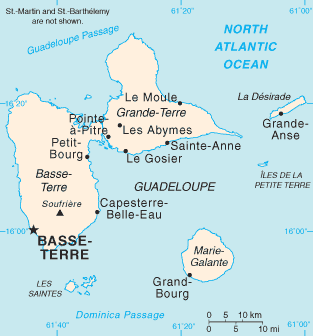
What a horrid day in history it must have been for this part of the world.  In Guadeloupe, Martinique, the 25th deadliest hurricane (since 1492) occurred on this date in 1666.  It is estimated that 2000 were killed.  According to the accounts, every boat on the coast was completely destroyed including a 17-ship fleet which carried 2000 troops (there is where the numbers originate).  That particular fleet sunk, as a matter of fact.  The island's batteries (which were six feet thick) were completely destroyed, and the canons were actually washed away.  I think it safe to say that more than 2000 were killed.

I cannot imagine how horrific and terrifying it must have been to deal with massive storms like this before the invention of meteorological equipment.  I know these kinds of storms are still frightening, but at least we often have warning and can evacuate the area and take precautions.

For more information, please check out:

Tuesday, July 10, 2012

This Day in History July 10, 1913

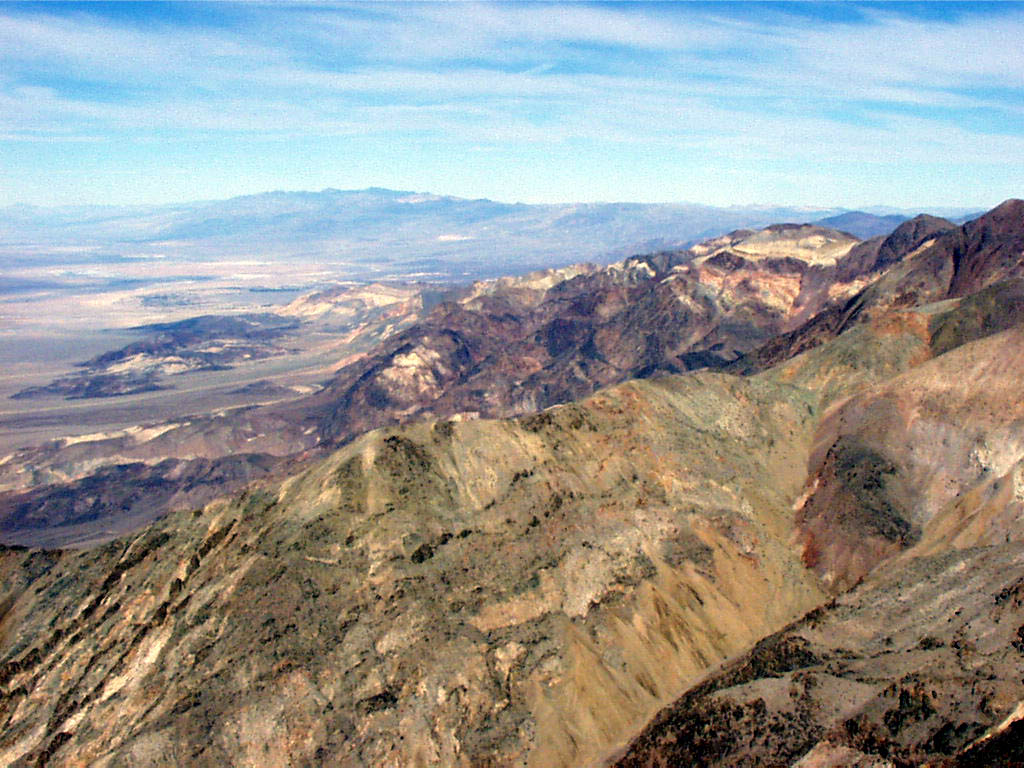
So, is it hot where you are today?  I know we always talk about heat waves and how the earth is continuing to heat up, but you may not know about today's feature.  You see a picture of Death Valley in this picture.  On this date in 1913, Death Valley had the highest recorded temperature:  134 degrees Fahrenheit!  I don't know about you, but I think that is a little bit hot!  It happened in this portion of Death Valley:
During that particular heat wave, Death Valley had five consecutive days that were 129° F or above.  Until 1922, Death Valley held the record for the hottest place on earth!  It was overtaken by the Libyan Sahara Desert that registered 136.4 ° F on September 13 of that year.  


Paradoxically, Death Valley also had its coldest temperature on record during this same year:   It was on January 8th of that year that in the same place (Furnace Cree), the temperature bottomed out at 15°F.


Answer me this--who would actually want to live there?  I can imagine possibly going to visit it when the temperature was not as bad.  And we now have air conditioning.  Yes, it looks beautiful.  But would you actually want to live there?  No, thank you.  I will take my Pacific Northwest summer any day.  (I was never a fan of Texas summers!)


For more information, please check out:
http://winecountry.it/articles/sideways/996
http://www.americansouthwest.net/california/death_valley/weather.html
http://www.nps.gov/deva/naturescience/weather-and-climate.htm
http://en.wikipedia.org/wiki/Death_Valley
http://famousdaily.com/history/death-valley-hits-134-F-highest-temperature.html

Friday, June 22, 2012

This Day in History June 22, 1919

What a chilling picture, eh?  And this was reality on this date in 1919 in Fergus Falls, Minnesota.

The second deadliest tornado in Minnesota history was responsible for this damage.  It struck at 4:46 P.M., killed 57, injured 200, and destroyed about 400 buildings--including 228 homes.  Some curious things happened as a result of this F5 tornado.  Lumber was carried ten miles away.  A blank check was found 60 miles away, and Lake Alice was filled with lumber and storm debris.

The Great Northern Oriental Limited passenger train was coming through Fergus Falls at just this time, and it was thrown off the tracks.  Amazingly, none of the 250 passengers were injured!  Thirty-five of the casualties were in the Grand Hotel, a 3-story structure.  And as a side note, although there was no such thing as an "F5" tornado at this point in history, it is clear from the descriptions that it must have been.

For more information, check out:
http://www.examiner.com/article/weather-history-june-22-record-temps-storms-tornadoes-flooding-tropics
http://www.crh.noaa.gov/fgf/?n=fergusfallsf5
http://en.wikipedia.org/wiki/1919_Fergus_Falls_tornado

Friday, June 8, 2012

This Day in History June 8, 2001

So was anyone in Texas on this date in 2001?  Actually, I was, but I wasn't in the area where this storm hit.  It was this date in 2001 when Tropical Storm Allison had been affecting Texas and Louisiana for three days with winds over 60 MPH and a lot of flooding.  In the end, 22 people died.

I have lived in hurricane-prone and tornado-prone areas for a lot of my adult life--Florida and Texas.  I am very fortunate to never have gone through one.  The closest I ever got was a bad thunderstorm causing a tree to fall on our mobile home when we lived in Florida.

For more information about this tropical storm, check out:
http://www.thepeoplehistory.com/june8th.html
http://www.hpc.ncep.noaa.gov/tropical/rain/allison2001.html
http://www.khou.com/community/slideshows/Photos-Tropical-Storm-Allison--121959284.html
http://weather.wikia.com/wiki/Tropical_Storm_Allison_(2001)
Related Posts Plugin for WordPress, Blogger...
Your Ad Here